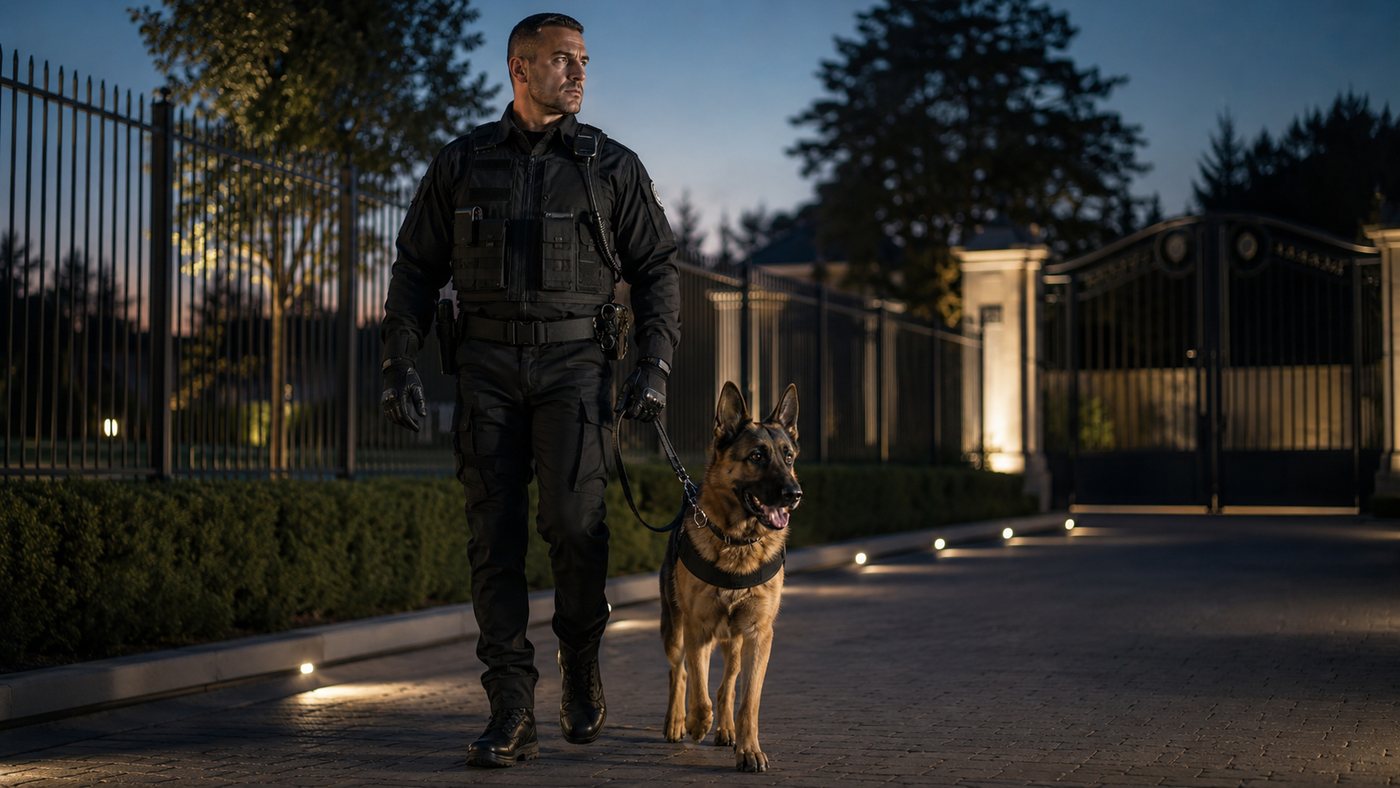
Specialist K9
General Purpose K9 Security & Patrols
NASDU accredited handler and dog teams covering ground that static guarding cannot, with a deterrent effect no camera matches.
NASDU accredited handler and dog teams covering ground that static guarding cannot, with a deterrent effect no camera matches.
A handler and dog team is not a guard with a dog attached. It is a trained unit in which the dog detects and the handler decides, and the two are assessed together. That distinction is what separates a professional canine deployment from a liability.
A dog detects presence by scent, sound and movement across distances and in conditions where a person sees nothing. On a large site, one team can cover what would otherwise take several static officers, and it does so proactively rather than waiting at a fixed point.
Intruders weigh risk. Cameras record, fences delay, but the presence of a working dog changes the calculation entirely, which is why sites with canine cover are so often left alone after the first sighting.
Our teams are trained and assessed to the BS 8517 code of practice, and we operate in line with the Guard Dogs Act 1975, which requires a competent handler in control at all times. Welfare records, licensing and certification are available for your files.
Our dogs are trained working animals under continuous handler control. Deployment is planned around public exposure, and teams are selected accordingly.
NASDU accreditation for handlers, BS 8517 for team training and welfare, and full compliance with the Guard Dogs Act 1975.
Specialist detection sweeps combined with a reduction strategy — because finding substances once changes very li…
Specialist K9Accredited explosive detection dog teams for venue sweeps, pre-event clearance, access screening and heightened-…
Specialist K9Where hostility, organised theft or a live threat is present, a handler and dog team provides both deterrent and…
Speak to our operations desk about k9 security & patrols and we'll advise on the right cover for your site.